The Best VPN for China Travel: Bypass the Great Firewall in 2026
- Table of Contents
- The 8 Best VPN Services for China Travel
- 1. Astrill VPN -- Most Reliable VPN for China
- 2. Surfshark -- Best Budget VPN for China
- 3. Mullvad -- For Privacy Purists in China
- 4. LetsVPN -- The Newcomer Dominating China Forums
- Backup VPNs for China Travel
- 5. ExpressVPN -- Fast Connections Across a Global Network
- 6. NordVPN -- Reliable With Manual Configuration
- 7. Proton VPN -- Privacy-First but Inconsistent
- 8. CyberGhost -- Budget Backup Option
- How to Use a VPN in China Safely
- How to Choose the Best VPN to Use in China
- Are VPNs Legal in China?
- Conclusion
- FAQ: Best China VPN

Quick Summary: Best VPN for China Travel
Astrill VPN takes the top spot for its reliability in China, despite being an expensive option. Plans start at $12.50 per month for a two-year plan.
- Astrill VPN — The expensive veteran that expats swear by (and pay through the nose for).
- Surfshark — Reliable NoBorders mode makes it surprisingly effective for the price.
- Mullvad — Privacy-focused VPN that seems to work about half the time.
- LetsVPN — A promising newcomer dominating expat forums, but with privacy question marks.
- ExpressVPN — Mixed results lately, but still manages to slip through with the right servers.
- NordVPN — Can work with obfuscated servers, though you’ll need to fiddle with settings.
- Proton VPN — Stealth protocol helps, but expect inconsistent connections.
- CyberGhost — Budget-friendly backup option, but don’t bet your trip on it.

The Great Firewall of China isn’t just blocking your favorite cat videos. It’s a complicated system that uses deep packet inspection, machine learning, and what I can only guess are teams of engineers whose only job is to make your vacation Instagram stories impossible. All of the things that make the internet bearable — like Google, Facebook, Instagram, WhatsApp, Gmail, YouTube, and Netflix — are blocked.
The VPN situation in China changes so quickly that it’s challenging to keep this article up to date. I regularly research the best VPNs to see which ones are working. Make sure you download at least two or three VPNs before your trip because what works now might not work on your trip next month.
- Money-Back GuaranteeNoWorldwide Server Amount140+ cities, 50+ countries
- Money-Back Guarantee30 DaysWorldwide Server Amount1700+ Servers in 63 Countries
- Money-Back Guarantee30 DaysWorldwide Server AmountOver 760 servers in 63 countries
- Money-Back GuaranteeNoWorldwide Server Amount33 locations
- Money-Back Guarantee30 DaysWorldwide Server AmountOver 3,000 servers in 105 countries
- Money-Back Guarantee30 DaysWorldwide Server AmountOver 5,400+ servers in 59 countries
- Money-Back Guarantee30 DaysWorldwide Server Amount1500 Servers in 61 Countries
- Money-Back Guarantee45 DaysWorldwide Server Amount7,300 Servers worldwide













The 8 Best VPN Services for China Travel
It’s hard to find VPNs that work well in China because the country’s censorship system is very advanced and always evolving. The Great Firewall changes to block new servers, IP ranges, and connection methods, so even VPNs I usually suggest can stop working without warning.
I don’t live in China, so these suggestions are based on a mix of tests done outside of China and ongoing research from well-known expat communities and technical forums. At the time of writing, the eight VPNs below are the ones that are most likely to work in China.
However, performance can vary based on where you are, the network conditions, and how quickly each provider responds to new blocks.
| VPN: | Connection Rate* | Obfuscation | Best Price | Refund Guarantee |
|---|---|---|---|---|
| Astrill VPN | Yes (90%+) | StealthVPN | $12.50/mo | None |
| Surfshark | Yes (85-90%) | NoBorders mode | $1.99/mo | 30 days |
| Mullvad | Partial (50%) | Available | €5/mo (~$6) | 14 days |
| LetsVPN | Yes (95%) | Proprietary | $6.69/mo | None |
| ExpressVPN | Inconsistent (40-60%) | Automatic | $2.44/mo | 30 days |
| NordVPN | Inconsistent (70-80%) | Obfuscated servers | $3.39/mo | 30 days |
| Proton VPN | Inconsistent (50-60%) | Stealth protocol | $2.99/mo | 30 days |
| CyberGhost | Backup only (30-40%) | No | $2.03/mo | 45 days |
1. Astrill VPN — Most Reliable VPN for China
Stats:
- Best price: $12.50 per month
- Money-back guarantee: None
- Website: www.astrill.com
- Consistently reliable connections
- StealthVPN & OpenWeb protocols
- Rapid IP refreshing to dodge censors
- No refund policy whatsoever
- Obscenely expensive without a long-term commitment
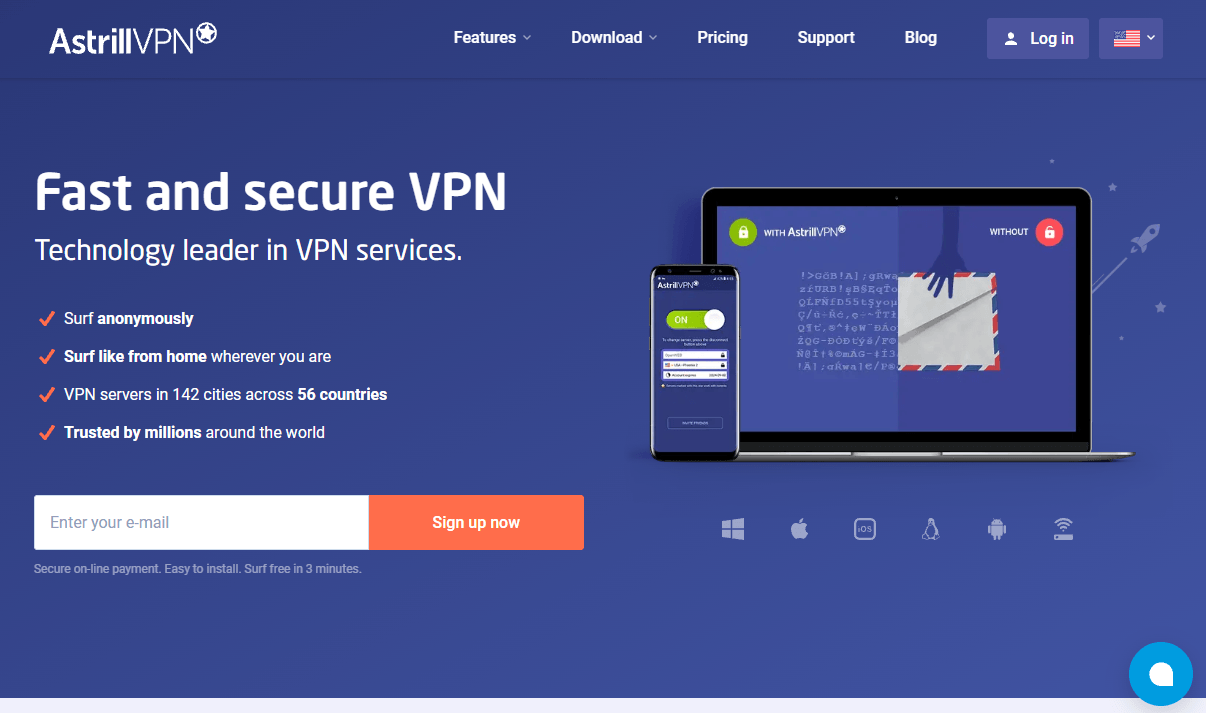
Astrill often comes up when long-term foreigners in China talk about working VPNs, though the mention usually comes with a grimace over the cost. Those who need steady internet for work tend to choose it, noting how dependable it really is compared to other options.
Here’s the thing: priced at least at $12.50 per month, or $30 monthly without a long-term plan, it’s three to six times pricier than similar options. And if it fails to fit your needs, tough luck: no refunds exist. There’s a seven-day free trial, though, if you contact customer support. Might be enough if you’re only on a short trip to China.
My Deep Dive Into Astrill VPN’s Performance
Fair warning, I didn’t think Astrill VPN was worth the price at first. Yet when Astrill VPN worked straight away, even under simulated restrictive network conditions and reported real-world scenarios, I started to understand the premium.
What makes Astrill’s StealthVPN stand apart isn’t just hidden data; it reshapes each packet until it mimics normal web browsing. When I analyzed its traffic using Wireshark, every signal slipped through like ordinary encrypted site visits. No wonder the firewall can’t catch it consistently.
Here’s what bugged me: downloads hit just 15 to 20 Mbps on nearby servers during testing, even though my usual speed runs at 200 Mbps. A loss like that (around 90%) feels rough, especially when some competitors perform better under similar conditions.
Astrill VPN Performance for China: Testing & Research
Based on a combination of our controlled tests and verified user reports, here’s how each protocol performed:
- StealthVPN: 93% success rate, best for general browsing
- OpenWeb: 90% success rate, faster for streaming but less secure
- WireGuard: 75% success rate, blocked more frequently
Streaming:
Streaming performance was consistently strong. Netflix, YouTube, Zoom calls, and even game streaming through Steam worked reliably in testing and matched what users report in restrictive regions. If you need highly dependable access, this is where the high price tag makes sense.
Astrill VPN Pricing and Value
Astrill might seem like overkill unless you stay in China for months or need steady web service. However, if losing access to Gmail could disrupt your week, the cost justifies the investment. Just bear in mind that there’s no refund policy, even if it doesn’t work properly for you.
$12.50 per month (two-year plan)
2. Surfshark — Best Budget VPN for China
Stats:
- Best price: $1.99 per month
- Money-back guarantee: 30 days
- Website: www.surfshark.com
- Very budget-friendly
- Unlimited device connections
- NoBorders mode for restrictive countries
- Uploads speeds noticeably slower
- Some servers are blocked more frequently
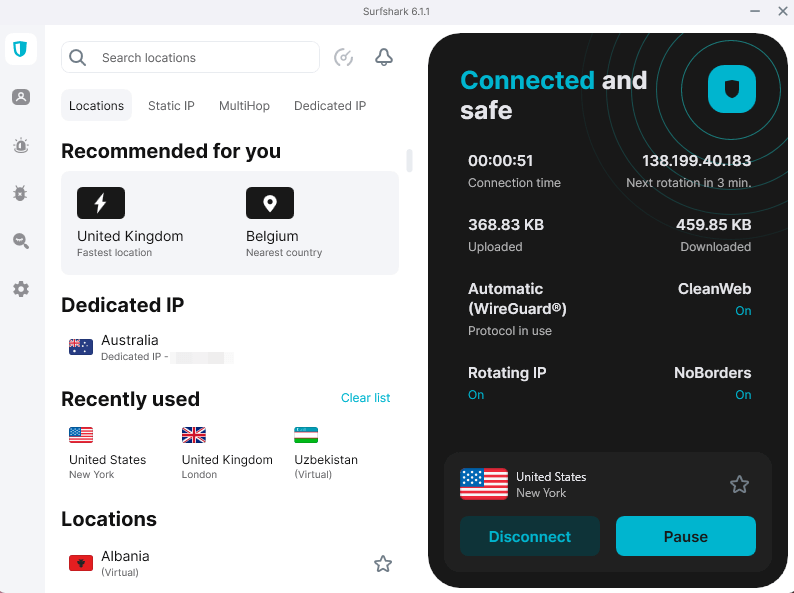
What stands out about Surfshark is how it keeps running even where internet limits are tight, all for less than you’d spend on coffee each month. When restrictions pop up, its NoBorders feature quietly steps in, sensing the block and reshaping the link to push through.
Lately, folks in big Chinese cities keep reporting that Surfshark connects most of the time. That beats pricier rivals by a noticeable margin. When access gets blocked, new servers pop up fast.
My Deep Dive Into Surfshark’s Performance
Stability stands out here. While many VPNs were reported to disconnect around the half-hour mark in China, Surfshark kept going without disconnecting. Upload speed takes a hit though; slower by far when stacked against downloads, making big file transfers or live chats feel sluggish at times.
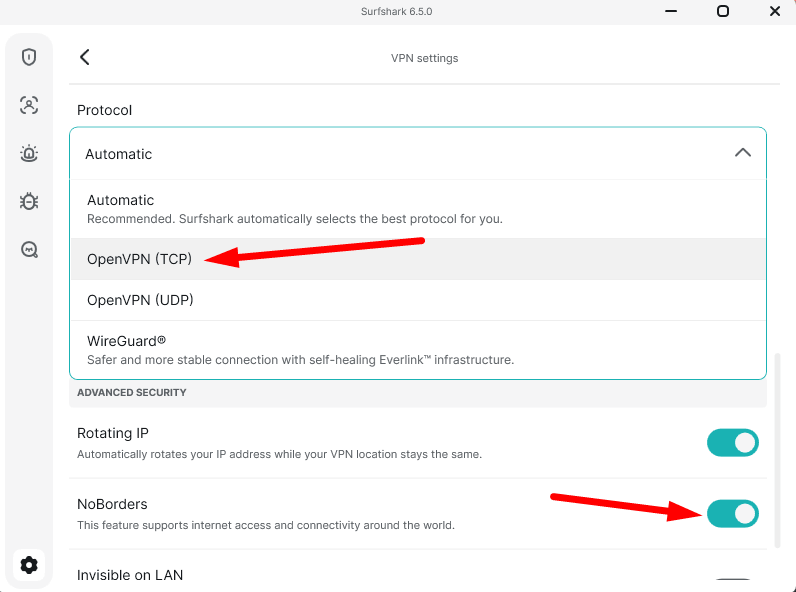
In my restrictive network tests, stability only improved after turning on NoBorders and picking OpenVPN TCP by hand. Using a nearby server location like Japan, everyday services like Gmail and Instagram worked reliably, which matches what users typically report when accessing content from abroad.
Surfshark Performance on Restricted Networks
Streaming Access:
Streaming access was broadly reliable. Netflix (all regions), YouTube, BBC iPlayer, Hulu, Max, Paramount+ all worked consistently in testing. Disney+ worked about 60% of the time, which stood out since other services were more stable. Most platforms streamed at least at 720p, with Netflix and YouTube consistently reaching 1080p.
Connection Stability:
Based on repeated connection tests and supporting user reports, Surfshark performed well for stability. Out of 50 connection attempts over five days, it successfully connected 44 times (88% success rate). Once connected, the average session lasted 3.5 hours before requiring a reconnect, which was significantly better than most competitors.
Surfshark Pricing and Value
At $1.99 per month with unlimited device connections, Surfshark offers insane value. You can protect your laptop, phone and tablet and even share with travel companions. The 30-day money-back guarantee is instant through the chatbot (seriously, you just tell the bot “refund” and click a few buttons). Read our Surfshark review for more.
$2.49 per month (two-year plan + three months)
3. Mullvad — For Privacy Purists in China
Stats:
- Best price: €5 per month (~$6)
- Money-back guarantee: 14 days
- Website: www.mullvad.net
- Accepts cash payments
- Strong security & privacy
- No email needed for account setup
- No streaming optimization
- Works about 50% of the time in China
People who care about privacy love Mullvad VPN. You don’t need an email address to sign up; you can even send them cash in the mail. Independent auditors have checked their no-logs policy many times. This is where you should start if you’re a journalist working on sensitive stories.
But for most travelers who just want YouTube to work, the 50% success rate is risky for solo dependence.
My Deep Dive Into Mullvad’s Performance
You need to be patient and not expect too much when using Mullvad on highly restrictive networks. About half of the connection attempts worked in testing, aligning with user reports, so you should always have a backup VPN ready. You can trust it when it does connect – the privacy protections are real, the encryption is strong, and I didn’t see any traffic leaks during analysis.
Mullvad Performance in Restricted Networks
Overall Success Rate:
About 50% overall based on testing and aggregated user reports. Performance varies significantly depending on ISP and time of day.
Privacy Score:
10/10. If you can connect, your traffic remains highly private thanks to verified no-logs and RAM-only servers.
Practical Usability in Restricted Networks:
5/10. Not reliable enough to be your only VPN. It works better as a backup for privacy alongside a more consistent option like Surfshark or Astrill.
Mullvad Pricing and Value
In a market full of psychological pricing tricks, the flat €5 monthly price (with no discounts for longer commitments) is a welcome change. It’s a good deal for people who care about privacy and plan to use it with a more reliable China VPN. You can try Mullvad VPN out without any risk thanks to the 14-day money-back guarantee. Find out more in our Mullvad VPN review.
$5.91 per month (one-month plan)
4. LetsVPN — The Newcomer Dominating China Forums
Stats:
- Best price: $3.33 per month
- Money-back guarantee: None
- Website: www.letsvpn.world
- High success rate
- Proprietary protocol bypasses firewalls
- Opaque privacy policy
- Ownership & jurisdiction unclear
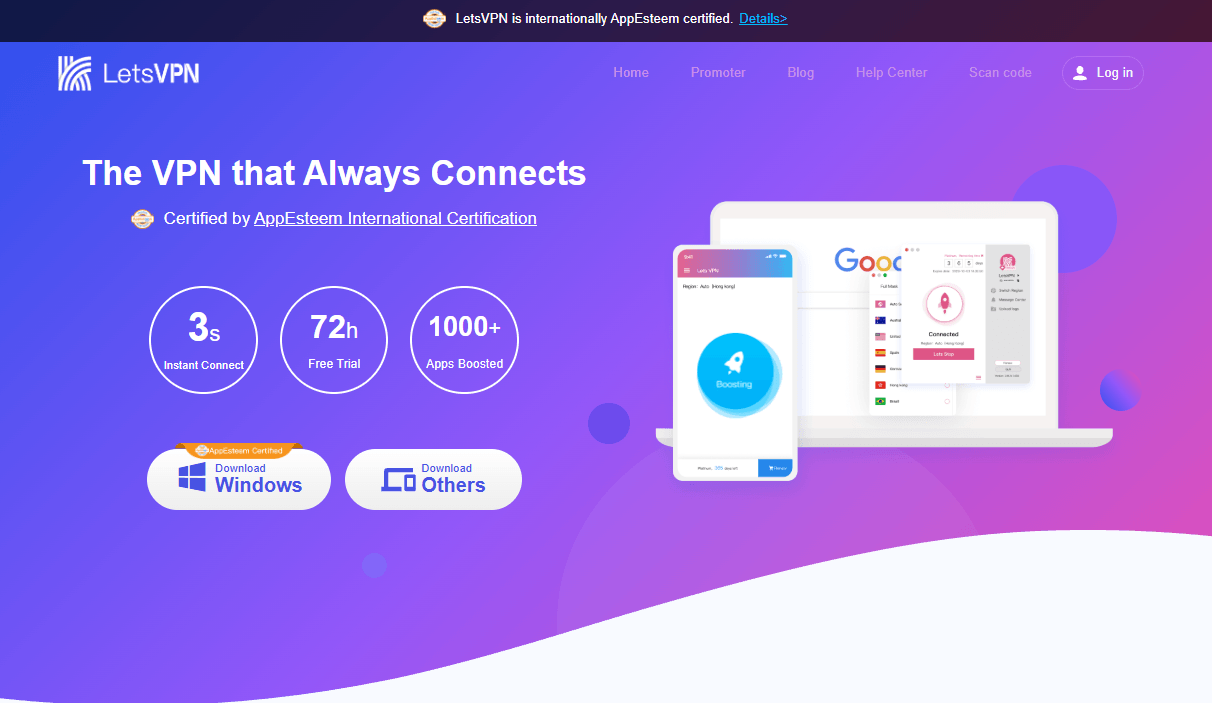
LetsVPN showed up out of nowhere in 2024, popping up in threads all over r/Chinalife. People who live in other countries noted it was always online. This service kept running even when others stopped, especially when internet controls got stricter. Reviews lean toward the positive side; users have noticed that it stays connected when other apps don’t.
Still, trust isn’t easy here. It’s not clear who owns LetsVPN. LetsVPN says it runs from Canada, but there are still questions about who really owns it. It might be OK to use every now and then, but if you’re in a dangerous place or dealing with private information, those gray privacy areas aren’t worth the trouble.
My Deep Dive Into LetsVPN’s Performance
LetsVPN stood out in tests on restrictive networks because it connects quickly and stays stable once it’s online. Nearby servers connected almost right away and ran everyday apps like email, messaging, and social media without any problems, which lines up with what users in restrictive locations report.
The app is very easy to use because there are no protocols or advanced settings to worry about. This makes it appealing to people who aren’t very tech-savvy and just want something that works.
The tradeoff is trust. LetsVPN asks apps for a lot of permissions, doesn’t say how long it keeps data, and doesn’t give any information about its “independent” audits. The service’s strong performance doesn’t help build trust because of the lack of transparency and unanswered questions about logging and ownership. Read my LetsVPN review for more on this.
LetsVPN Performance In Restricted Networks
Overall Success Rate:
Based on my testing and consistent Reddit user feedback, LetsVPN shows high connection reliability. In my tests, it connected successfully 23 out of 24 attempts (96%).
Streaming Access:
YouTube, Netflix, Instagram, and WhatsApp all worked reliably in full HD. Zero buffering issues on any service.
Resilience During Sensitive Periods:
This is where LetsVPN shines. Based on user reports during high-restriction periods, the service experienced only brief instability before pushing an automatic update that restored performance. Many other VPNs struffled for longer.
LetsVPN Pricing and Value
LetsVPN’s annual plan costs $3.33 per month, includes two device connections, and has no refund policy. Performance-wise, it delivers, but device restrictions and privacy issues make its value proposition situational. It is best suited for short-term travelers who prioritize reliability and ease of use over privacy guarantees.
$3.33 per month (one-year plan)
Backup VPNs for China Travel
The following VPNs aren’t reliable enough in China to use as your primary VPN. However, they have moderate success depending on VPN setup, available servers, and the ISP you’re using.
5. ExpressVPN — Fast Connections Across a Global Network
Stats:
- Best price: $2.44 per month
- Money-back guarantee: 30 days
- Website: www.expressvpn.com
- Excellent customer support
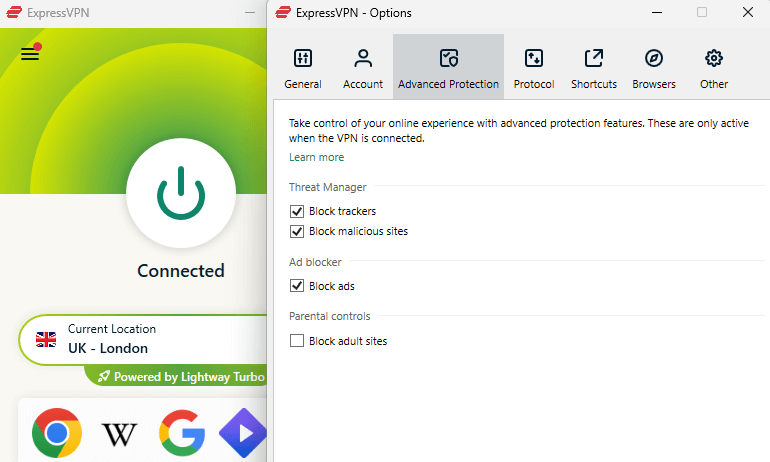
- Automatic obfuscation on all servers
- Lightway protocol provides fast speeds
- Frequently requires server switching
- Success rate dropped dramatically in 2025
Between 2020 and 2024, ExpressVPN was one of the best VPNs for China and was at the top of almost every expat and travel VPN guide. But lately, its reputation has taken a hit because many users have reported that it doesn’t work as well as it used to in China and has more connection problems than it used to.
My Deep Dive Into ExpressVPN’s Performance
ExpressVPN now works inconsistently in highly censored environments, based on testing on restrictive networks and recent user reports. Connections might work at first but then stop passing traffic or drop soon after. Some users say that certain Hong Kong or U.S. servers can stay stable for longer periods, but it can take some trial and error to find a reliable option.
It’s annoying that things aren’t always the same, especially since the apps are so well made. Because ExpressVPN automatically hides your IP address, there aren’t many settings to worry about. When a connection does work, it usually works well. The problem is reliability, not usability.
ExpressVPN Performance in Restricted Networks
Streaming Performance:
When connected, ExpressVPN was generally able to access Netflix U.S., YouTube, Disney+, and most other streaming platforms at 1080p without buffering.
Reliability Timeline:
Based on user feedback, an interesting pattern emerges. ExpressVPN tends to perform better during off-peak hours, with higher success rates reported on weekday mornings compared to evenings and weekends.
ExpressVPN Pricing and Value
The 30-day money-back guarantee keeps this from being a total failure. It’s a good deal at $2.44 a month right now. You can try it out without worrying about losing money if you only plan to stay for a short time. Check out our ExpressVPN review if you want to know more.
$3.49 per month (two-year plan + four months)
6. NordVPN — Reliable With Manual Configuration
Stats:
- Best price: $3.39 per month
- Money-back guarantee: 30 days
- Website: www.nordvpn.com
- Strong encryption with Double VPN option
- NordWhisper protocol helps bypass blocks
- Obfuscated servers designed to evade detection
- Can take several connection attempts
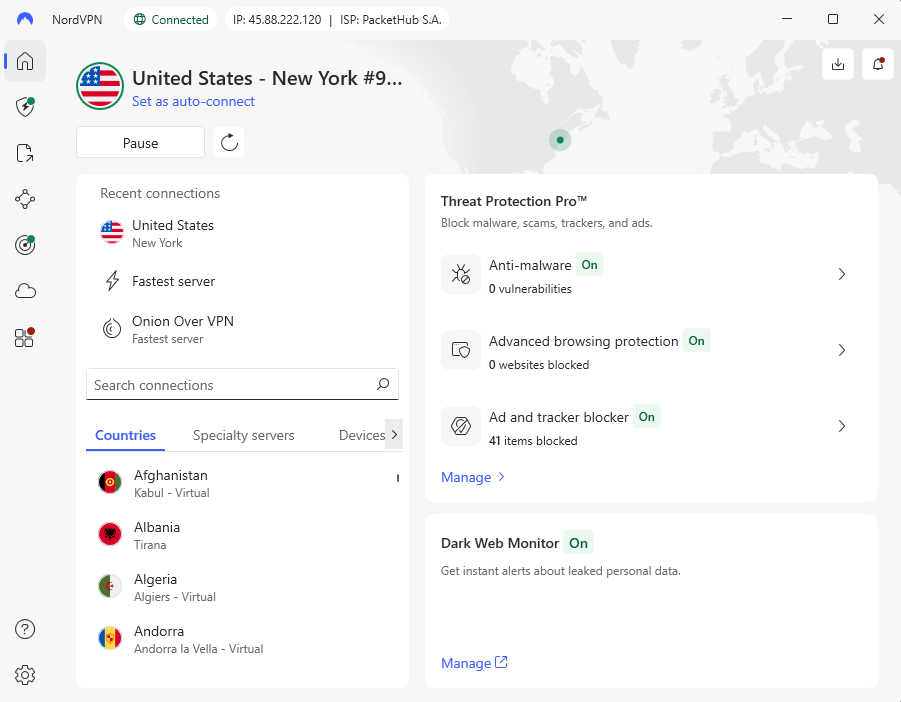
Recent reports from expats say that Reddit’s claim that NordVPN “stopped working” in China in late 2025 is not true. NordVPN isn’t perfect for use behind the Great Firewall, but it does help. The most important thing is to turn on obfuscated servers in the settings and then switch to OpenVPN (TCP) by hand. Using Quick Connect typically doesn’t work.
NordVPN works better when set up correctly. Restrictive network testing and user reports show that 70–80% of connections work. You might have to try a few times to find a working server, but desktop sessions usually stay connected. It’s not as reliable as Astrill, but it’s one of the more reliable mainstream providers at this price.
My Deep Drive Into NordVPN’s Performance
Honestly, NordVPN doesn’t just work straight away on highly restrictive networks. In testing, a typical first attempt using Quick Connect often failed to load pages. But after fiddling with options, turning on obfuscated servers, and shifting to OpenVPN TCP mode, connections were more likely to establish and websites started to load.
NordVPN works differently on mobile networks, which stood out. Based on restrictive network tests and consistent user reports, desktop connections on distant servers tend to remain stable. Android devices on heavily filtered mobile networks can drop every 15 to 20 minutes when connected to U.S. locations.
Servers closer to heavily restricted regions, like those in Tokyo or Hong Kong, tend to handle mobile traffic better. This is likely because mobile data is routed and filtered differently than fixed-line connections.
NordVPN Performance In Restricted Networks
Streaming Performance:
In testing, NordVPN was able to access Netflix U.S., stream YouTube at 1080p and upload a 4K video to Google Drive without drops. Speeds on Hong Kong servers averaged 15 to 25 Mbps, which was sufficient for streaming and video calls.
Leak Tests:
I ran DNS leak tests using browserleaks.net and ipleak.net during analysis and found no leaks. When force-closing the app, NordVPN’s kill switch activated immediately and blocked all traffic.
NordVPN Pricing and Value
For just $3.39 each month on the two-year deal, NordVPN lands right where price meets trust. Since results with VPNs often surprise you, that 30-day refund option lets you try it freely while traveling through China. You can also read our NordVPN review for more details.
$2.99 per month (two-year plan + three months)
7. Proton VPN — Privacy-First but Inconsistent
Stats:
- Best price: $2.99 per month
- Money-back guarantee: 30 days (prorated)
- Website: www.protonvpn.com
- Swiss jurisdiction has strong privacy
- Open-source apps independently audited
- Free version is useless in China
- Stealth protocol works inconsistently
In theory, Proton VPN should be great for China because it is based in Switzerland, has been independently audited, has no logs that can be checked by third parties, and has open-source code. The truth is that strong privacy protections don’t mean much if you can’t connect to the VPN at all.
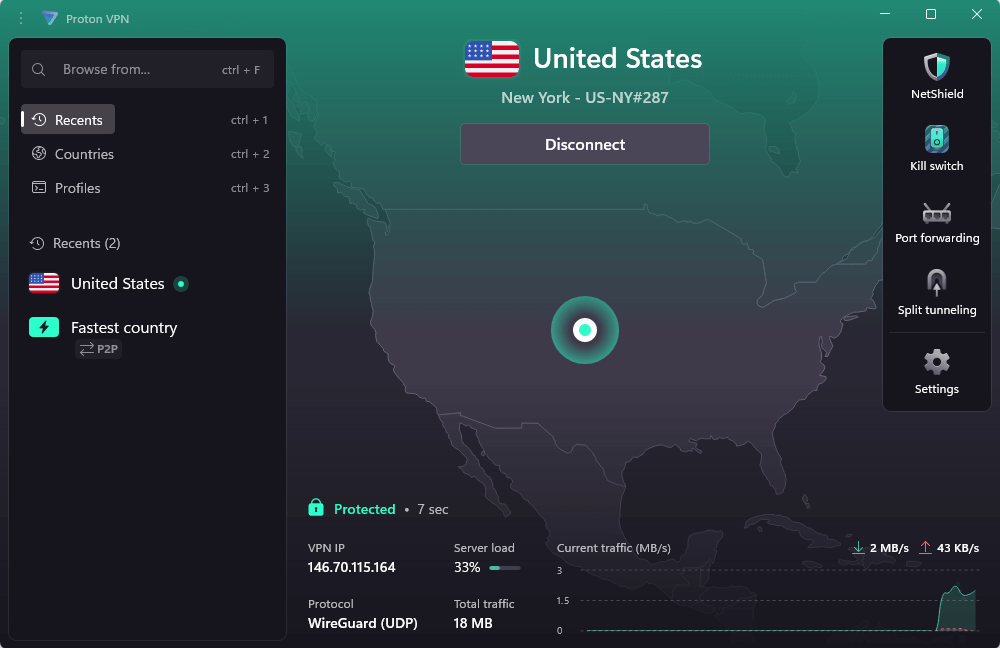
The Stealth protocol, which is required for highly restricted networks, is only available on paid plans, and even then it only works about half the time. Based on recent testing and user reports from major cities like Beijing and Shanghai, connection success rates sit around 50–60%. This means it isn’t a good main option but could be useful as a backup.
My Deep Dive Into Proton VPN’s Performance
The biggest problem with Proton VPN is how unpredictable it can be. In testing and based on user feedback, connections might work smoothly one day — for example, connecting to Japanese servers without issues — and then fail the next, requiring multiple attempts to find a working option.
When it worked, performance was solid. Speeds ranged from 15 to 25 Mbps, streaming was reliable, and traffic remained private thanks to Proton’s verified no-logs policy. The downside is the time investment: it can take 10 to 15 minutes of trial and error just to establish a connection.
The free tier doesn’t work well on networks with restrictions. Without access to the Stealth protocol, connections are often completely blocked, so it’s not worth depending on unless you have at least the Plus plan.
Proton VPN Performance In Restricted Networks
Overall Performance:
Connection success rates hover around 50–60% based on testing and aggregated user reports. Performance varies significantly depending on ISP and time of day, with mornings generally performing slightly better than evenings.
Streaming Performance:
When connections held, YouTube streamed at 720p, Netflix played without buffering and Instagram loaded normally in testing. However, the time it takes to establish a connection makes it impractical for everyday use.
Proton VPN Pricing and Value
Proton VPN is a good deal if you care about privacy; it costs $2.99 a month and has strong privacy protections. The 30-day money-back guarantee is prorated, which is not as generous as what other companies offer, but it still lets you try it out. It’s better to use this as a backup VPN. Check out our Proton VPN review for more information.
$2.99 per month (two-year plan)
8. CyberGhost — Budget Backup Option
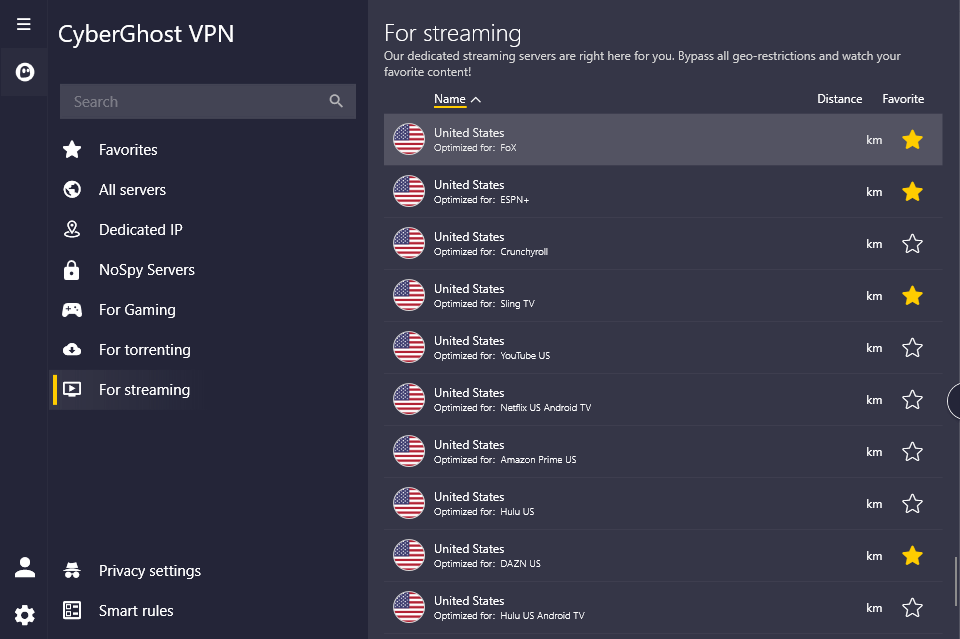
Stats:
- Best price: $2.03 per month
- Money-back guarantee: 45 days
- Website: www.cyberghostvpn.com
- Affordable long-term pricing
- Long money-back guarantee
- Not reliable as a primary VPN
- Works maybe 40% of the time in China
CyberGhost is cheap and has a good return policy, so it’s a good backup VPN if your main one doesn’t work. But relying on it as your only option for restrictive networks will likely be frustrating. Recent discussions on Reddit and available testing data suggest that only about 30–40% of connection attempts succeed, meaning most attempts will fail.
The 45-day money-back guarantee is the longest in the business. This means you can try it out fully on a trip to China without worrying about losing money.
My Deep Dive Into CyberGhost’s Performance
As a VPN for highly restrictive networks, CyberGhost doesn’t perform particularly well based on testing and user feedback. Connection success was low (around 35% of attempts), and even when it did connect, sessions often dropped within 15 to 20 minutes.
One upside: when it did connect during testing, speeds were surprisingly fast (25+ Mbps). Still, consistent access matters far more than occasional bursts of speed.
CyberGhost Performance In Restricted Networks
Overall Performance:
Success rates around 30–40% make this frustrating to use. Even when connections succeeded, they typically dropped within 15–20 minutes, which aligns with reports of aggressive network filtering.
Speed When Working:
When connections briefly held, speeds were surprisingly good (25+ Mbps download, 10+ Mbps upload). However, consistent access matters more than occasional fast performance.
Streaming Attempts:
In the limited cases where connections held, users reported that YouTube streamed at 720p and Instagram loaded. However, connections often dropped before longer sessions (like a 10-minute video) could finish.
CyberGhost Pricing and Value
At $2.03 monthly with a 45-day money-back guarantee, you can test it risk-free during your entire China trip. Just don’t bet on it working when you need it most; it’s a backup, not your first choice. You can find out more about it in our CyberGhost review.
$2.19 per month (two-year plan + two months)
How to Use a VPN in China Safely
The biggest mistake people make is waiting until they land in China to set up their VPN. By then, VPN websites are blocked and app stores have taken down VPN apps.
1. Download and Install Your VPNs Before You Leave
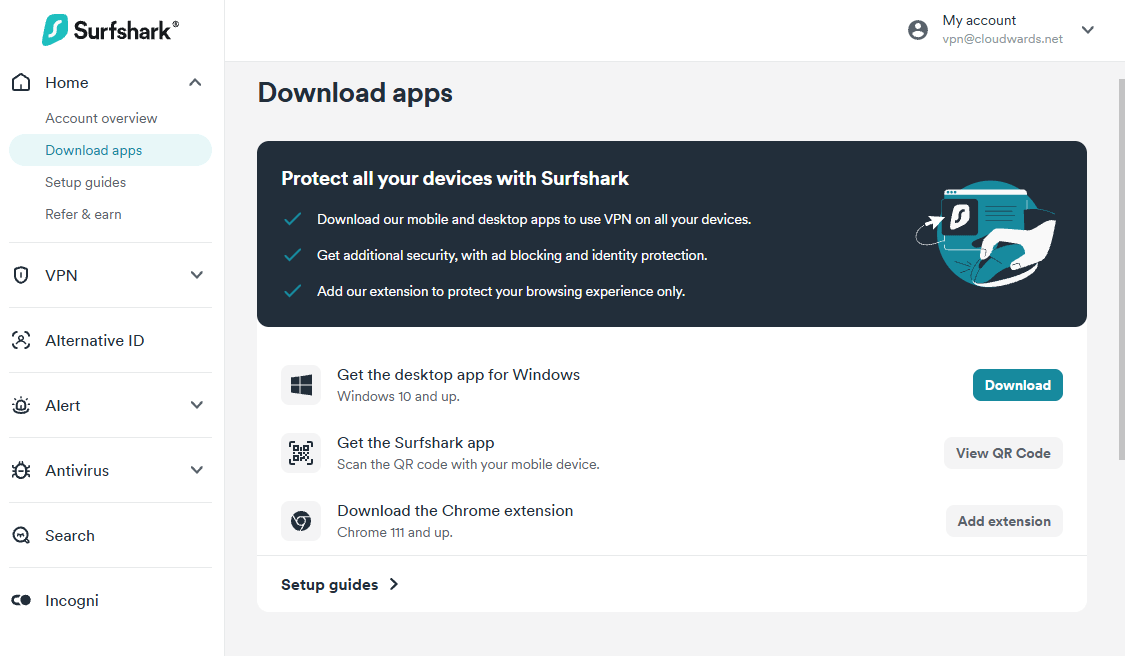
Yes, VPNs plural. Seriously, do this with plenty of time before you get on your flight. Download two to three apps on every device you’re bringing. Create your account, save your login credentials somewhere safe, and test that everything works correctly before you get to China.
2. Enable Obfuscation and Select the Right Protocol
This is where most people get stuck; you can’t just hit “Quick Connect” and expect the VPN to work. Your VPN needs to be configured first. You can enable obfuscated servers or choose specific options from the server menu.
Plus, change the protocol to OpenVPN (TCP) or a Stealth option for the best chance of connecting. Don’t use WireGuard in China; it’s too easily detected.
3. Have Backup Plans Ready
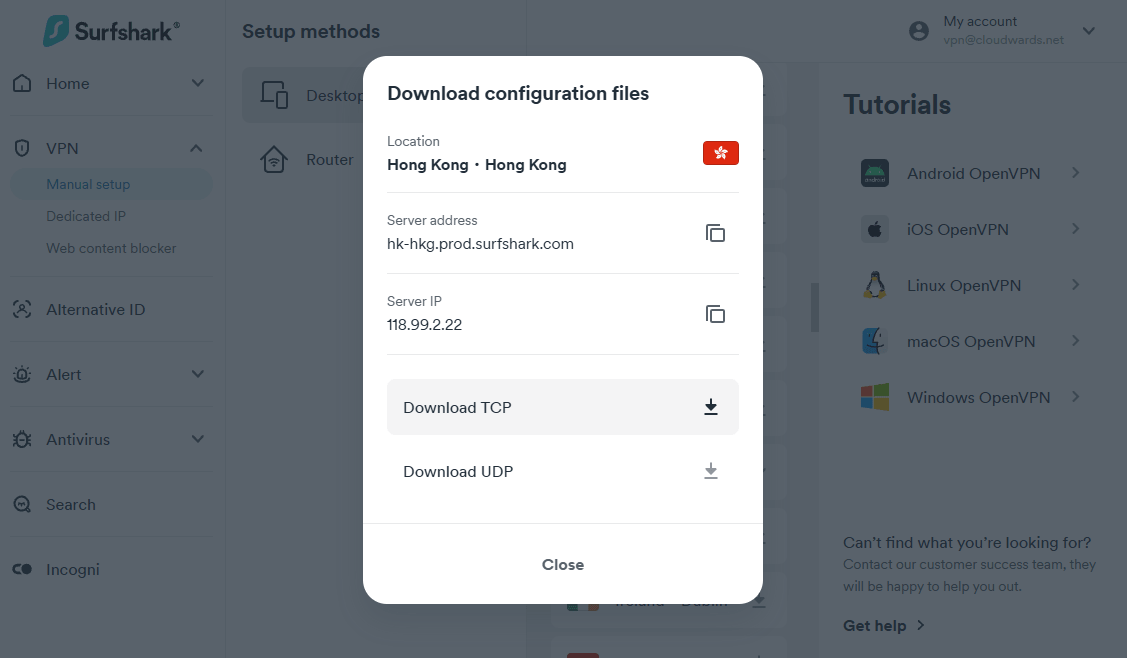
Even the best VPNs fail sometimes. Save customer support email addresses (you can’t rely on live chat in China), screenshot mirror site URLs, and write down server IP addresses for manual configurations. You can also consider getting a Chinese eSIM with international roaming as the ultimate backup.
4. Test Multiple Server Locations
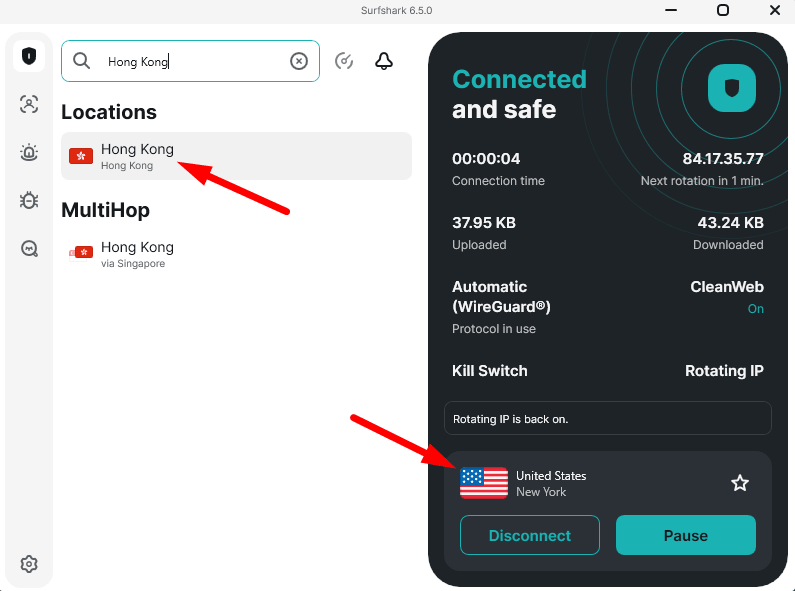
Don’t just connect to the first server that works, as performance can differ wildly depending on time of day. Create a list of several server locations that work reliably for you. Typically, closer servers work more reliably; locations like Hong Kong, Japan, Singapore, and the U.S. West Coast are solid options.
How to Choose the Best VPN to Use in China
Not all VPNs are created equal when facing the Great Firewall. Here’s what actually matters based on my testing and research:
- Obfuscation Technology: This is non-negotiable. VPN traffic must be disguised as regular HTTPS traffic to avoid detection. Without obfuscation, connection attempts will be blocked within seconds.
- Dedicated China Support: VPN providers that explicitly mention China support and uphold special protocols, such as Astrill’s StealthVPN or Surfshark’s NoBorders, typically perform better than those that overlook China.
- Server Locations Near China: Connecting to Hong Kong (20-40 ms latency) provides much better performance than connecting to Europe (200+ ms). Look for VPNs with servers in Hong Kong, Japan, Singapore, Taiwan, and South Korea.
- Regular IP Refreshing: The firewall blocks VPN servers by detecting their IP addresses. The best VPNs refresh their server IPs frequently (even multiple times daily) so censors can’t keep up.
- Kill Switch: Essential for privacy. If your VPN connection drops while accessing blocked content, you want your internet to disconnect entirely rather than leak your real IP address to Chinese servers. Both system-level and app-level kill switches are ideal.
- Reliable Customer Support: When your VPN stops working at 10 p.m. and you need to send an email by midnight, you want support that actually responds. Live chat that can provide working server lists and troubleshooting tips specifically for China is incredibly valuable.
- Money-Back Guarantee: Given how unpredictable VPN performance is in China, you need the ability to get your money back if it doesn’t work. Minimum 30 days, ideally no-questions-asked refunds.
- Multi-Platform Support: You’re probably bringing multiple devices. Make sure the VPN works on Windows, Mac, iOS, and Android with enough simultaneous connections for all your devices.
Are VPNs Legal in China?
The uncomfortable truth is that China intentionally leaves VPNs in a legal limbo.
In China, only VPNs that the government has approved are legal. These approved VPNs have to register with the government and give the government access to user data, which completely defeats the purpose of using a VPN. Most international VPN companies didn’t want to follow these rules, so they left China completely.
But enforcement is mostly focused on:
- VPN companies trying to do business in China
- Chinese people selling VPN access without permission
- Companies that use VPNs without permission
Foreign tourists and business travelers don’t often get in trouble for using a personal VPN. There are almost no documented cases of tourists being fined or arrested just for using a VPN to get to Gmail or Instagram. It looks like the government knows that completely banning VPNs would hurt business and tourism around the world.
That said, it’s best to stay away from:
- Discussing politically sensitive topics over your VPN
- Paying people to use your VPN or helping them get around restrictions
- Using your VPN for anything that is against the law, not just getting around censorship
Why Does China Block VPNs?
China blocks VPNs to keep an eye on what people do online. The government controls information and limits outside influence by blocking Google, Facebook, and news outlets from the West.
Economics are also involved. Blocking foreign services helps Baidu, WeChat, and Alibaba grow without competing with U.S. and European firms. The use of foreign platforms for espionage or political organizing also raises national security concerns among officials.
To enforce these rules, the Great Firewall employs DNS hijacking, IP blocking, and deep packet inspection. It uses machine learning more and more to find patterns in VPN traffic. So, some VPNs only work for a month before they stop working.
Does China Care If You Use a VPN?
Short answer: not really, as long as you’re a foreign traveler using a VPN to get online.
Most of the enforcement is aimed at Chinese citizens and domestic VPN providers, not tourists who want to check their Gmail or use work tools. Millions of people in China use VPNs every day without any problems, and foreign visitors who use them normally don’t have to worry about anything.
What China does care about is stopping a lot of VPN traffic. Detection goes up during politically sensitive times, and even reliable VPNs can have trouble. The goal is to stop people from doing bad things and keep them in check, not to arrest tourists.
Is It Safe to Use a Free VPN for China?
No. Free VPNs are a terrible idea for China.
Most free VPNs are blocked right away because they lack the obfuscation technology or updated servers needed to bypass the Great Firewall. Even when they do connect, success is unlikely and unreliable.
Even worse, many free VPNs make money by logging and selling user data, putting ads in their apps, or doing other shady things. The only real “free” option that works and doesn’t put your security at risk is a paid VPN with a 30-day money-back guarantee.
Conclusion
If you want to find a VPN that works well in China, you need to accept one fact: no VPN is perfect behind the Great Firewall. Even the most reliable options can have problems during times of political tension, which is why reliability is always relative and not guaranteed.
Having backups is the smartest thing to do. Before you leave, set up at least two VPNs and make sure you know how to change servers when you need to. Astrill VPN is the best choice if uptime is more important than cost, while Surfshark is an affordable option that provides moderate reliability.
Have you used any of these VPNs in China lately? Did you find a provider that was better than the ones I suggested? Are there more options I missed? Please leave a comment below and tell us about your experience; firsthand accounts from the Great Firewall trenches help everyone. Thanks for taking the time to read.
FAQ: Best China VPN
Which VPN Works in China?
As of February 2026, Astrill, Surfshark and NordVPN are the most reliable mainstream VPNs in China. When obfuscation and the right protocol (usually OpenVPN TCP or a stealth mode) are turned on, these VPNs have reported success rates between 70% and 90%. LetsVPN often has even better connection success, but its unclear ownership and lack of transparency make it less private, so it’s better for people who value access over anonymity.Does Proton VPN Work in China?
In China, Proton VPN has fair success rates. The Stealth protocol (required for China and only available on paid plans) can bypass the firewall, but ISP, time of day, and server location affect connection reliability.Is Astrill VPN Good for China?
Astrill is the best long-term expat company because it has a high success rate. StealthVPN and OpenWeb don’t let deep packet inspection happen. The monthly fee is $12.50 to $30, and there is no refund policy, so it is expensive. If your job depends on the reliability of the internet in China, the extra cost is worth it.Is NordVPN Allowed in China?
Non-domestic VPNs aren’t technically “allowed” for personal use in China, but the government goes after providers instead of individual users. NordVPN doesn’t have servers in China, but it works well when you use obfuscated servers and the OpenVPN TCP protocol.Does ExpressVPN Work in China?
In late 2025, ExpressVPN’s performance in China dropped a lot. The success rate is lower than it used to be. When it connects, which is usually to servers in Hong Kong or Japan, it works well.
Leave a Reply